Top Five: Gilmore Girls Episodes

A rare post about The Tube.

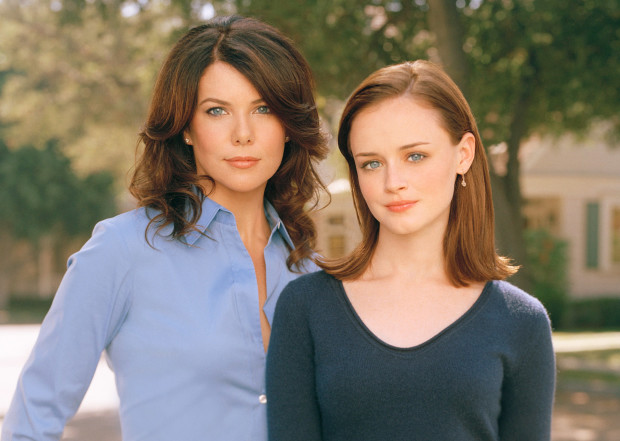
Tonight’s Top Five is bittersweet. My favorite television show, Gilmore Girls, airs its series finale tomorrow night.

As a small tribute, here is my list of Top Five favorite episodes. Great Scott – it was hard to pick just five.

1- Season 2, Episode 10: The Bracebridge Dinner. All of the cast assembled for a night of entertainment at the Inn? Absolutely too much fun. Also very cute Rory/Jess and Lorelai/Luke Moments.

2- Season 2, Episode 13: A-Tisket, A-Tasket. Again, wonderful because of how much of the town is involved. And again, more cute Rory/Jess and Luke/Lorelai times. This is the type of episode quality that was gone in the 7th season when Amy & Dan left.

3- Season 4, Episode 7: You Jump, I Jump, Jack
. I’ve never been a huge Logan fan, but this episode was perfect. I loved the Life and Death Brigade event, and the end of the episode was incredibly fun.

4- Season 3: Episode 22: Those Are Strings, Pinocchio. Rory graduates from Chilton. Her graduation speech is beautiful and a total tear-jerker.

5- Season 2, Episode 20: Help Wanted. I love how Lorelai helps Richard out in this episode. A touching, sweet change of pace for a relationship that has its ups and downs.

There are way too many great episodes left off this list. Maybe I should just leave it at a “Top Five Seasons of Gilmore Girls” – Decision: 1, 2, 3, 4, and 5.

What are your favorite episodes?

Tomorrow night we’ll be watching the last episode in a fashion Lorelai and Rory would approve of – a large pizza and lots of junk food.

Goodbye Girls.

You Jump, I Jump, Jack
(This post was brought over from emilyw.vox.com. Click here for the original post and comments.)

Top Five: Book Covers

I’ve been thinking a lot about book design lately, hence this Top Five Favorite Book Covers post. I also decided to limit my selections to only books from my own collection, otherwise the pool is much too vast to chose from in a timely matter.

(all book covers are shown below)

1. The Mysterious Benedict Society by Trenton Lee Stewart, Jacket art by Carson Ellis. There are several things I love about this cover, but above all I love that it instantly established itself as a book I must read, and a book I knew I would love. Yes, that’s Judging A Book By Its Cover at its most primal. But I admit it. I was hooked. Next, and most likely the reality behind reason 1, is that the art style channels my favorite artist, Edward Gorey. The art reveals so much about what to expect from the book – that it’s fun, quirky, mischievous, charming, adventurous and mysterious. And it reveals details about the characters that we find out in the book. I frequently turned back while reading to gaze at the cover.

2. Special Topics in Calamity Physics by Marisha Pessl, Jacket design by Paul Buckley. I love the contrast between the bright red and black squares with modern design, and the tan band that’s much more classic. I suppose if you wanted to dig deep you could say the traditional design of the tan band represents Blue’s upbringing and father, a little stuffy and classic, and the other, colorful boxes represent her new school friends and Hannah. I like the “Ex Libris” bookplate for the author’s name. Overall it’s a great package that really pops off the shelf and makes you want to pick it up and read.

Side note: However much I like the US cover, I felt jipped when I saw the beauty of Christopher Silas’s Penguin UK edition of the book. That is the style of art that I go nuts for.  (Shown below)


3. Everything Is Illuminated by Jonathan Safran Foer, Jacket design by Anne Chalmers. This cover starts the book with a bang, and I love it. It’s very bold, just like the story. It’s also very unusual, just like the story. It does a great job of conveying the craziness and shenanigans that are going to occur inside. On the cover of the paperback, the barcode is actual right on the front, stuck in crooked between the words. I love that.

4. The Paris Review Interviews, Vol. 1, Jacket design by Henry Sene Yee. Mainly I just love the beauty of the quotation marks, with the text inside. Everything is perfectly balanced, and the color choices are excellent. A great piece of graphic design. The design would work well on a poster too.

5. A Heartbreaking Work of Staggering Genius by Dave Eggers, Jacket painting by Komar & Melamid. This book, as with each of the others on this list, immediately told me that I needed to buy this book, that this book was for someone like me. Simple and gorgeous typography set on a beautiful painting. Just like the title, the complete cover is almost mockingly self important, it goes just far enough to look suspiciously attractive, while secretly not taking itself seriously. That’s the joke. And it’s brilliant.

A HEARTBREAKING WORK OF STAGGERING GENIUS
(This post was brought over from emilyw.vox.com. Click here for the original post and comments.)

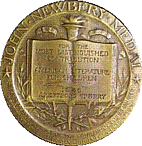
Top Five: Caldecott Books

Last summer I completed my quest of reading all 69 Caldecott Medal winners. Since then, one of my favorite children’s book authors and illustrators, David Wiesner, won the 2007 Caldecott Medal for Flotsam.

The Caldecott Medal is primarily recognition for outstanding art and illustrations, though how these illustrations work with the text of the book is a factor in its excellence. In my own list of favorites, text plays heavily into how much I like the book – almost equal in importance. Thus my list is more of a list of my picks for all around brilliance and personal all time favorites out of the 70 Medal winners.

1. Where the Wild Things Are written and illustrated by Maurice Sendak. (1964 Medal)
This is one of the most beloved children’s books of all time, and holds top spot in my heart as well. Every word, picture, and detail is imaginative and perfect.

2. Many Moons written by James Thurber and illustrated by Louis Slobodkin. (1944 Medal)
James Thurber is just as brilliant and funny while telling a children’s story. Slobodkin’s pen and color illustrations are squiggly and charming. I have no idea why someone felt the need to release a later version with different illustrations. Why redo a Caldecott winner? This is the story of a Princess named Lenore who is sick and wants the moon to make her feel well again. The story is hilarious, and the moral is wise: perspective is everything.

3. May I Bring a Friend? written by Beatrice Schenk de Regniers and illustrated by Beni Montresor. (1965 Medal)
This is a cute story of a king and queen who are friends with a small boy and invite him to meals. The boy always asks if he can bring a friend. The answer is always yes, even though he keeps bringing zoo animals as his guests! The illustrations are grand and expressive – they do a great job showing how over the top and funny it is to have animals at the dinner table.

4. Fables written and illustrated by Arnold Lobel. (1981 Medal)
I love Arnold Lobel (the imagination behind Frog and Toad), and this book is my favorite of his. Each spread is a different fable, one side for the story, and one side for the accompanying illustration. The fables are funny and creative, and they each have a fitting moral at the end. The illustrations are of the same beautiful style as the Frog and Toad books.

5. Song and Dance Man written by Karen Ackerman and illustrated by Stephen Gammell. (1989 Medal)
This is a beautifully sweet story of a grandfather revisiting his youthful days to people who appreciate it as if it were new: his grandchildren. Grandpa was a vaudeville song and dance man, and revives his music and jokes to entertain his loving audience of three. The illustrations are gorgeous and creative, with lots of bright colors.

Song and Dance Man Fables Many Moons May I Bring a Friend? Where the Wild Things Are


I haven’t read all the Caldecott Honor books yet (there are 221) but here is my Top Five so far:

1. Sector 7 written and illustrated by David Wiesner (2000 Honor)
2. Zen Shorts written and illustrated by Jon J. Muth (2006 Honor)
3. What Do You Say, Dear? written by Sesyle Joslin and illustrated by Maurice Sendak (1959 Honor)
4. Peppe the Lamplighter written by Elisa Barton and illustrated by Ted Lewin (1994 Honor)
5. Lion written and illustrated by William Pene de Bois (1957 Honor)

Zen Shorts (Caldecott Honor Book) Sector 7 (Caldecott Honor Book) Peppe the Lamplighter What Do You Say, Dear? Lion
(This post was brought over from emilyw.vox.com. Click here for the original post and comments.)